


by Ben Hull, MD Bright Vision Events
On paper, in-house venue AV looks like the safe option.
It’s familiar. It’s bundled into the venue conversation. It’s often positioned as “designed for this room”. For busy organisers under pressure, it feels like one less thing to worry about.
In reality, it’s one of the most common reasons conferences underperform technically, even when everything appears fine on the surface.
This isn’t a criticism of venues or their teams. It’s a structural issue. Venue AV and conference AV are not the same thing, and the gap between them is where problems creep in.

Venue AV Is Built for General Use, Not Your Agenda
Most venue AV systems are designed to support a wide range of events with minimal intervention. Think meetings, presentations, dinners, occasional panels. They prioritise versatility and ease of operation over precision.
Corporate conferences, on the other hand, are agenda-led. They involve multiple speakers, changing formats, live content, audience interaction, sometimes streaming, and very little tolerance for friction.
That mismatch matters.
A system that works perfectly for a boardroom presentation can struggle once you introduce roaming speakers, panel discussions, Q&A, video playback and tight transitions. The technology hasn’t failed. It’s simply being asked to do something it wasn’t designed for.
In-House AV Is Often Scoped to Minimum Viable Delivery
Venue AV packages are usually priced to cover the basics. That’s not a flaw. It’s a commercial reality.
What’s included is typically what’s required to make the room functional, not what’s required to make a conference polished. Additional microphones, extra screens, confidence monitors, specialist lighting or dedicated technicians are often bolt-ons rather than defaults.
The problem is that these limitations aren’t always obvious during planning. Everything sounds reasonable until rehearsals start, or worse, until the room fills with people.
By that point, options are limited.
Staffing Is the Hidden Constraint
This is where many conferences quietly struggle.
Venue AV teams are usually responsible for multiple spaces at once. Even when highly capable, their attention is divided. That’s fine for low-risk events. It becomes an issue when a conference requires constant monitoring, fast reaction and speaker support.
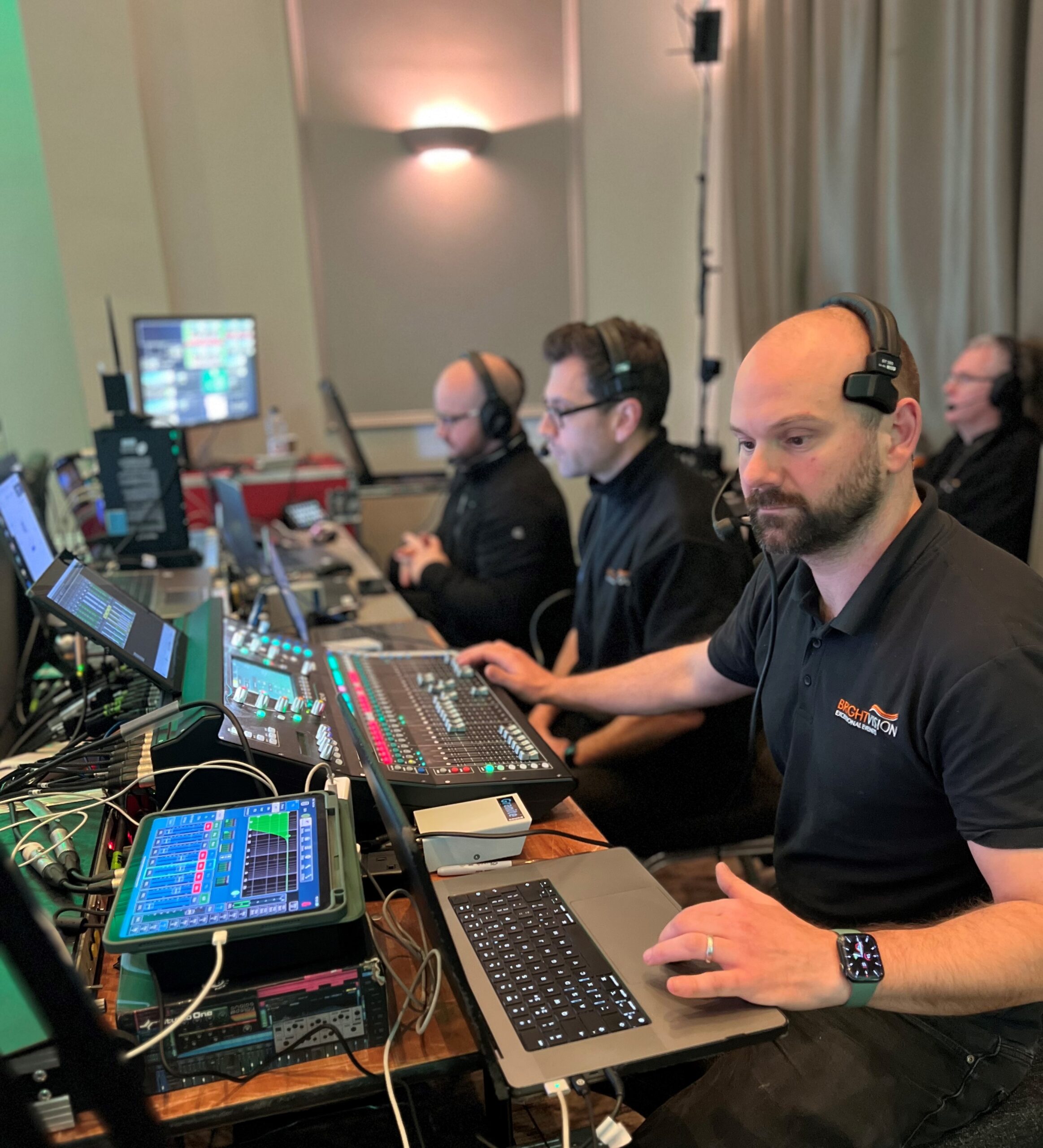
Corporate conferences are live productions. They need someone actively listening, watching and adjusting throughout the day. When AV support is stretched thin, issues don’t get caught early. They get noticed by the audience first.
That’s when confidence drops, even if the technical issue itself is minor.
Venue AV Is Optimised for the Room, Not the Experience
Venue systems are designed around the physical space. Conference AV should be designed around the experience.
Those are not the same thing.
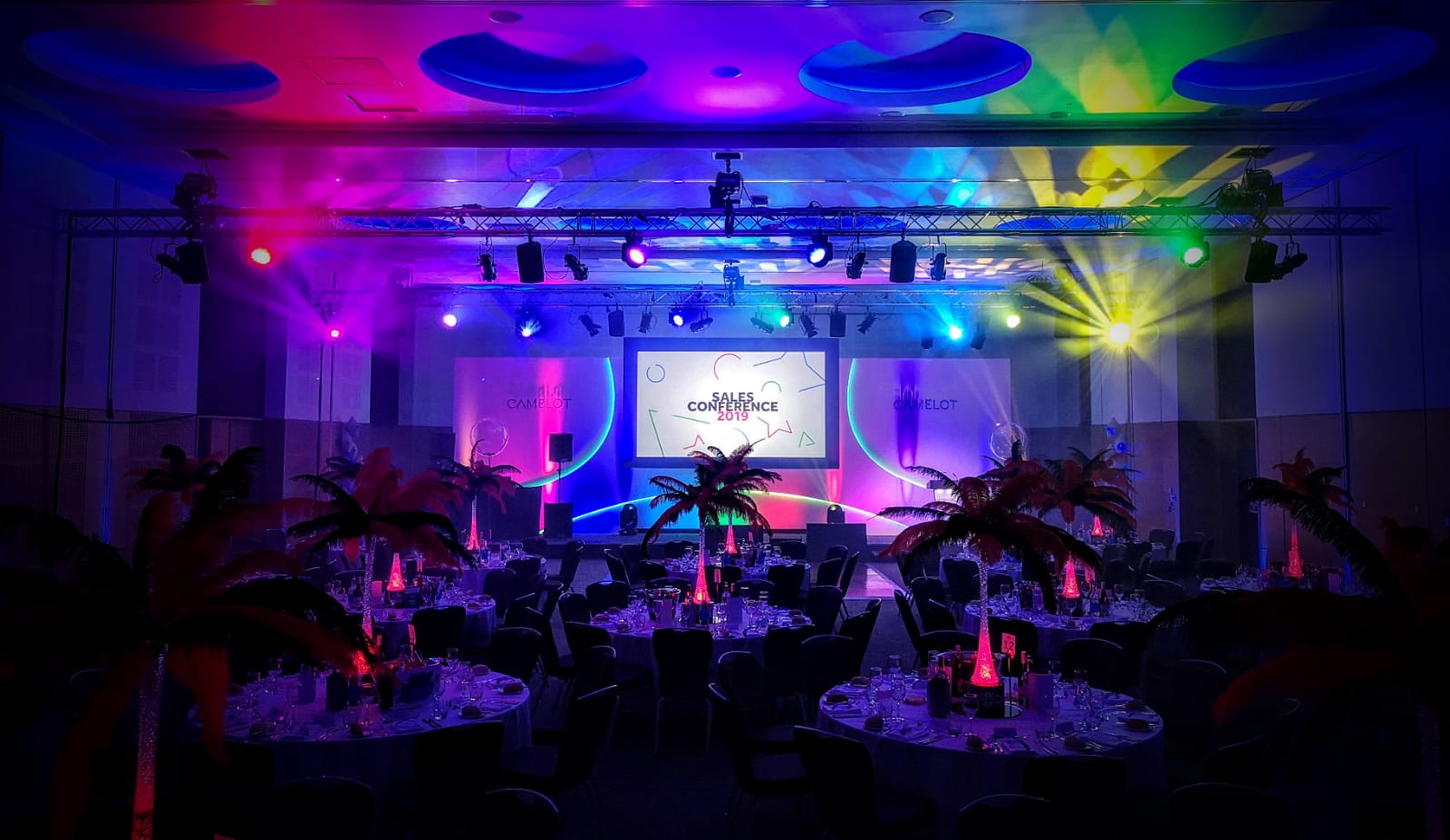
A venue might have speakers that technically cover the room, but not evenly enough for speech clarity across a large audience. Screens may be visible, but not ideally placed for all seating configurations. Lighting may be sufficient, but not flattering for speakers or suitable for filming.
These details don’t register until you see the event through the eyes of the audience. By then, it’s too late to redesign the system.
Hybrid and Streaming Expose the Gaps Fast
Hybrid conferences are where in-house AV limitations show up most clearly.
Streaming introduces a second audience with different technical needs. Audio that works in the room often sounds thin or unbalanced online. Camera placement designed for recording a meeting doesn’t translate to an engaging broadcast. Internet connections that are fine for emails struggle under sustained streaming load.
Venue AV is rarely architected with this in mind by default. Adding streaming on top of an in-house setup often reveals how little redundancy and separation exists between systems.
The result is an experience that feels compromised for remote attendees, even if the room itself feels acceptable.
Responsibility Is Often Unclear When Things Go Wrong
One of the biggest risks with in-house AV is accountability.
When AV is bundled with the venue, it can be unclear who owns what. Is a problem caused by the room? The equipment? The agenda? The speaker? The organiser?
This lack of clarity makes it harder to plan properly and harder to resolve issues quickly. Independent AV teams are typically scoped against the event itself, not the space. That difference matters when decisions need to be made in real time.
None of This Means In-House AV Is “Bad”
It’s important to be clear about this.
In-house venue AV works well for many events. Meetings, presentations, internal sessions and simple formats are exactly what it’s built for.
The issue arises when a conference demands more than “works”. When it needs consistency, flexibility, redundancy and active management across an entire day, the limitations become structural rather than technical.
The Real Question Organisers Should Ask
The decision isn’t “Is venue AV good enough?”
It’s “What happens if something goes wrong, and who is set up to deal with it?”
For conferences where reputation, credibility and audience trust matter, that question is far more important than whether AV is included in the venue package.
Final Thoughts
In-house venue AV falls short for conferences not because it’s poorly designed, but because it’s designed for a different purpose.
Corporate conferences are live productions with high expectations and low tolerance for friction. They benefit from AV that is designed around the agenda, the audience and the experience, not just the room.
Understanding that distinction is often the difference between a conference that simply happens and one that feels professional, confident and seamless from start to finish.
Corporate Event Management and Production, Team Building Days