


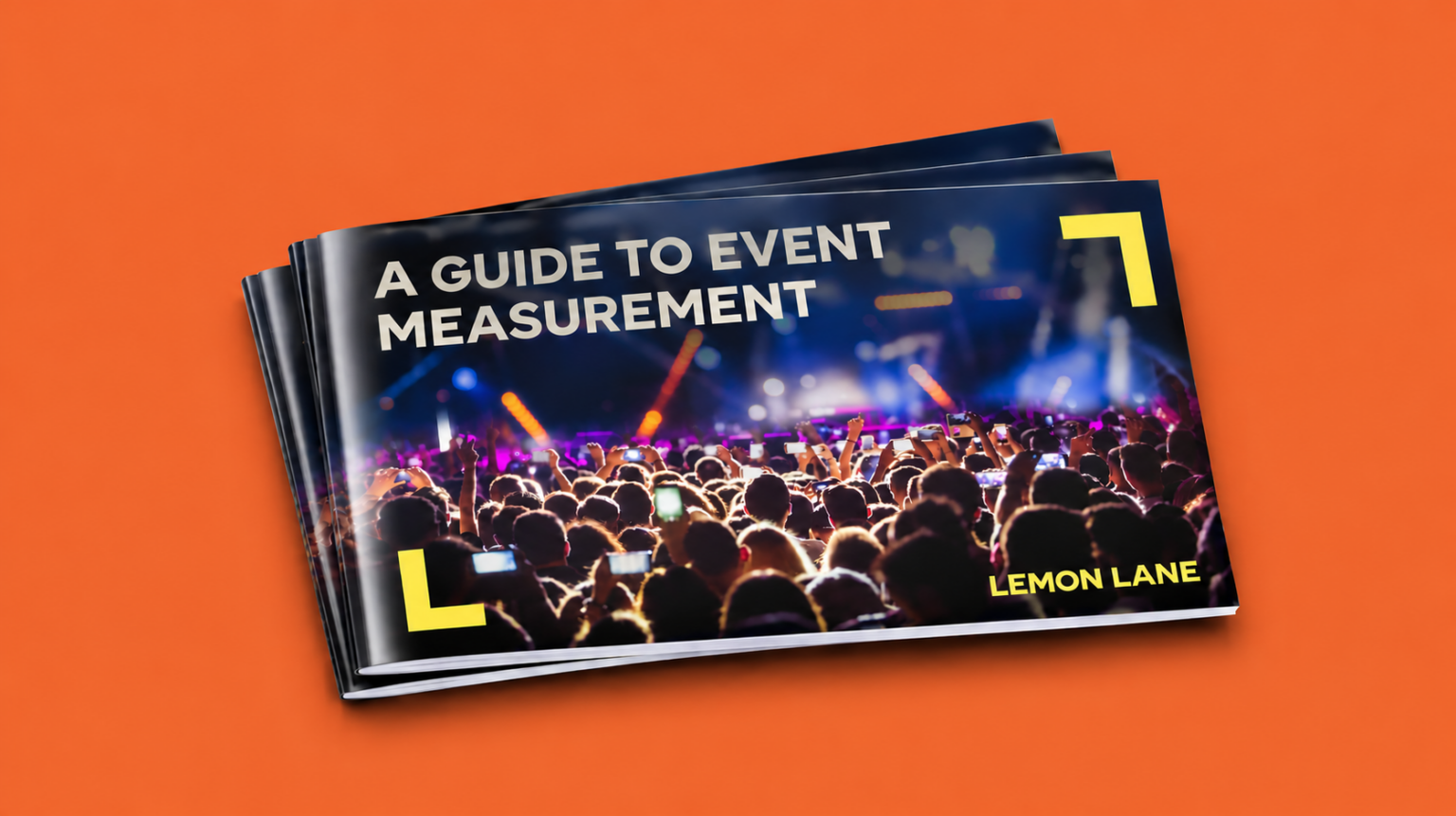
Independent event agency Lemon Lane is calling for a more meaningful approach to event measurement, highlighting how the industry’s reliance on attendance figures, satisfaction scores and traditional return on investment (ROI) can overlook some of the most valuable outcomes events create.
The agency has published ‘A Guide to Event Measurement’, a practical eBook designed to help organisations better understand the impact of their events, connect measurement to wider business objectives and make more informed decisions about future investment.
Drawing on more than 60 years of combined industry experience across its founding team, Lemon Lane believes the industry needs to look beyond what is easiest to count and focus instead on what actually changes as a result of an event. With event budgets under increasing scrutiny and stakeholders demanding clearer evidence of value, the agency argues that understanding these outcomes is increasingly important in demonstrating the commercial contribution of events.
”We put so much time, effort and money into creating brilliant events, but not always as much into understanding what they’ve actually achieved.” said Lucy Francis, Co-Founder and Director at Lemon Lane. “It’s easy to measure how many people turned up or whether they enjoyed themselves, but that only tells part of the story. What really matters is what people think, feel or do differently afterwards. That’s what we should be measuring.”
The guide explores why traditional ROI calculations can struggle to reflect the full value of events, particularly when commercial outcomes develop over time and are influenced by multiple interactions across the customer journey.
It also introduces four areas of value that organisations should consider when developing their measurement strategies: behavioural change, perception change, value to attendees and social value. Together, these areas encourage organisations to consider not only how an event performs on the day, but how it influences people’s understanding, attitudes and actions long after it has ended.
The guide reflects Lemon Lane’s wider approach to event measurement, which considers the commercial, intellectual and emotional impact of experiences. Through its proprietary In-Site measurement solution and Return on Resonance framework, the agency seeks to understand not only how events perform, but how effectively they connect with audiences, influence perceptions and inspire meaningful action.
This thinking underpins the guide’s central message: effective measurement begins with understanding what an event needs to achieve, rather than simply reporting what happened.
Designed to make event measurement more practical and purposeful, the eBook provides guidance on setting meaningful objectives, selecting appropriate measurement methods and combining quantitative data with qualitative insight. It also examines how different event formats require different measures of success, and why closer collaboration between events, marketing, sales and leadership teams can help organisations build a more complete picture of event impact.
Rather than advocating for more data, Lemon Lane encourages organisations to be more selective about what they measure, identifying the evidence that will provide the clearest picture of success and using those findings to improve future event strategies.
“It’s not always about collecting more data, unless that data is going to tell you something useful.” Lucy Francis added. “Event measurement doesn’t need to be complicated. It’s about being clear on what you’re trying to achieve in the first place, asking the right questions and using what you learn to make the next event even better. That’s really what we’ve tried to do with this guide – make measurement more practical and useful for everyone.”
Lemon Lane’s ‘Guide to Event Measurement’ is available to download here.